
Self-Leveling Concrete & Overlays in Seguin TX - a flat floor ready for what goes on top
Got a floor that dips or a patio that's worn and stained? We check the slab first, then level it inside or resurface it outside.
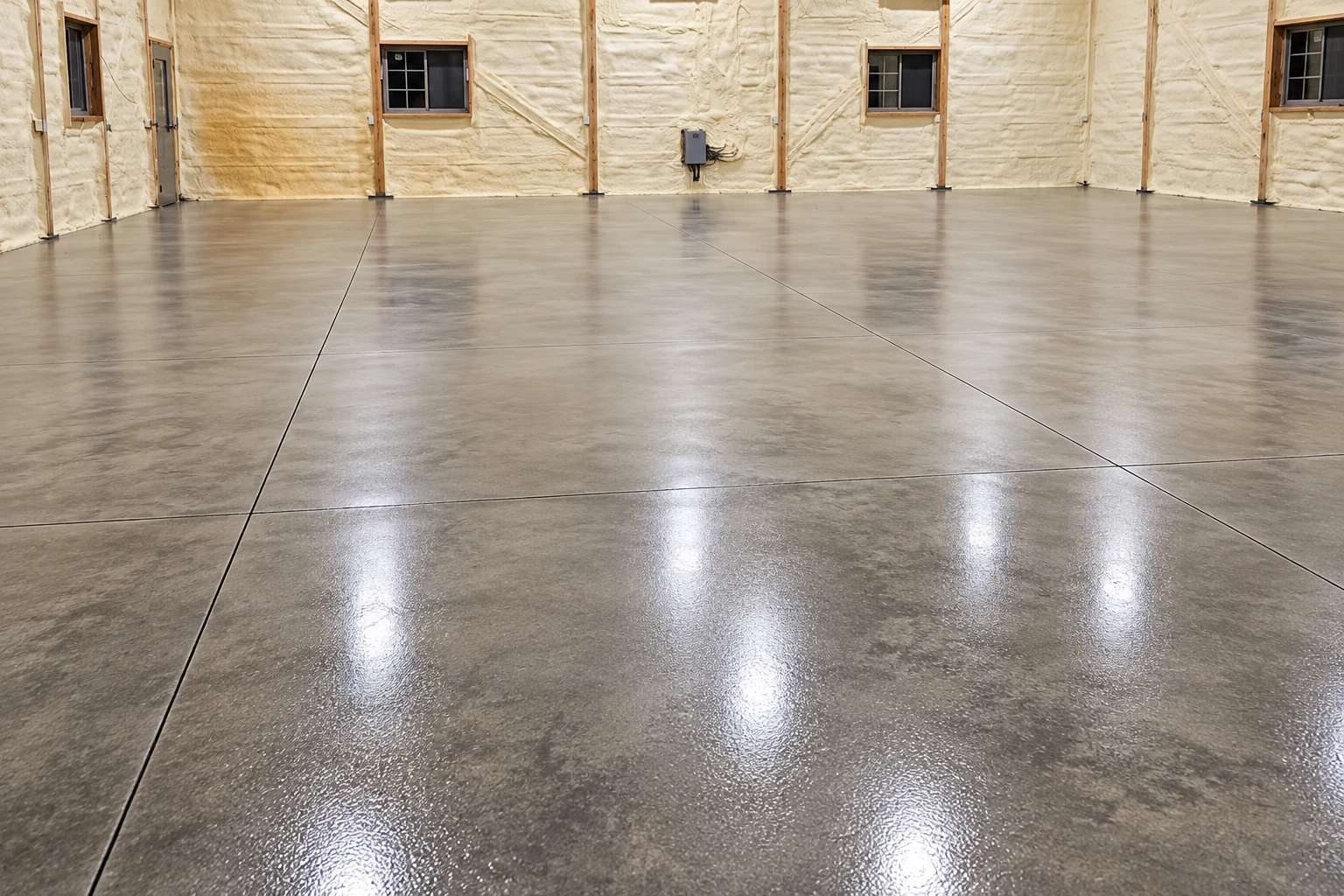
Do I need self-leveler or an overlay for my floor?
Self-leveling concrete and overlays in Seguin, TX are cement-based toppings that go over the concrete you already have, to bring a floor back to level or to restore worn, discolored concrete. Self-leveler is for floors inside your house, and outdoor slabs get an overlay instead.
Most calls start with a floor that dips, a slab that's worn or stained, or old flooring that left the concrete rough. Both products need sound concrete that isn't moving, because a crack from the slab shifting will show right through a fresh topping unless it's repaired first, so I check every crack to tell normal shrinkage from movement.
The price moves with the square footage, how far out of level the floor is, how many cracks need repair and whether the slab needs moisture work or old glue removed first. The schedule turns on the same things, since a moisture reading or a glue test can add a step before the pour, and the written estimate I give you after the visit lays out what your floor needs.
- Self-leveler is for floors inside, and patios, porches and other outdoor slabs get an overlay.
- Inside, a leveled slab gives tile, wood, vinyl or a floor coating a flat base.
- Outside, an overlay covers worn or discolored concrete without tearing out and repouring the slab.
What happens after you call about leveling a floor?
I look at every slab myself before we price it, and our own crew does the work with me running the job. Here's how it goes from your first call to the final walk-through.
Call or send us the form
Call (830) 340-0036 or use the form, and tell us whether it's a floor inside or a slab outside and about how big it is. We set a time for me to come look at it.
I check the slab myself
I look at the floor, test the slab for moisture, check the cracks and ask how you use the space. You get a written estimate that says what the slab needs before the pour, so the prep isn't a surprise later.
We prep and pour
If you go ahead, we set a date and our own crew does the prep and the pour, with me running the job. Any crack repair or glue testing from the estimate gets done before the new topping goes down.
Walk the finished floor together
Before we pack up, we walk the finished floor with you and look it over together. You'll know when it's ready for foot traffic and for whatever flooring or finish goes on top.
Concrete leveling, resurfacing and slab prep work
These photos show the kind of leveling and overlay work this trade does, from bare, prepped slabs to finished surfaces inside and out. Open any photo for a closer look at the surface and texture.
A light gray speckled coating covers a garage floor beneath two white overhead doors and a wood-paneled wall with mounted antlers.
Glossy speckled garage floor beneath two parked cars in an open garage.
Glossy gray and red flake floor fills a bright, empty room with white walls and tall windows.
An empty garage with a glossy black, white, and gray flake-coated floor and gray walls.
An empty garage with a glossy gray speckled coated floor, white walls, overhead lights, and utility equipment.
Smooth gray epoxy floor with a long drain in a spacious workshop with wood-paneled walls.
Get a written estimate for your floor or slab
Tell us the square footage, inside or out, and any cracks or old glue, and we'll reply within one business day. I'll come check the slab and give you a free written estimate, with no pressure to book.
(830) 340-0036Questions about self-leveling and overlays in Seguin
These are the questions I hear most in Seguin before a leveling or overlay job. Where a maker or the city sets the rule, I say so, because that's what decides how the work gets done.
How much does self-leveling concrete cost per square foot in Seguin?
Installed self-leveling compound on a concrete floor usually costs about $4.50 to $7 per square foot across the US, and that's the national going rate, not our price. Where your floor lands depends on the prep it needs, and I put your number in the written estimate after I check the slab.
Can self-leveling concrete be used outside on a patio?
No, self-leveler is made for floors inside, and one maker says its self-leveling underlayments are for interior floors only. Overlays are made to resurface patios, walks and other hard surfaces outside, so that's what we use on an outdoor slab.
Do I need a permit to level a floor or add an overlay in Seguin, TX?
Possibly, and the city's building office is the one that decides for your job. Seguin's Building Official issues permits to alter or repair a building, and the city's list of work that needs no permit names minor repairs, not leveling or overlays. I check with the building office before we start, and if a permit is needed, we apply as the contractor and you get a copy. The city wants a hired contractor registered and licensed with it before any permit is issued, and owners who live in a home registered as their homestead with the Guadalupe County Appraisal District can apply and do the work themselves.
How long after pouring self-leveler can I walk on it?
One maker says to stay off a new self-leveler for at least 2 to 3 hours, depending on temperature and humidity. That same maker says other trades and their dust should stay off it until it cures and the final flooring is in, so plan the next install around that.
What causes high moisture in a concrete slab?
Slab moisture can come from poor grading, weak drainage, gutters, or missing or faulty vapor barriers and sealants. Left alone, it can lead to mold, warping and whitening in the new flooring. The installers' trade group advises repeating moisture tests until the results fall within the flooring's limits, and if yours reads high, I'll tell you what it means for your floor before we set a date.
How do I know if the old glue under my flooring is safe to sand?
Have it tested first, because one maker advises testing all cutback adhesive, the black glue under a lot of older flooring, for asbestos before it comes up. Under that maker's advice, glue with asbestos stays unsanded, so the result decides how removal goes, and we get the test done before any prep starts.